It can feel overwhelming supporting your child on their reading journey, especially when teachers use terms you may not be familiar with. It’s common to hear words like "phonemic awareness" or "tap it out" during meetings or in classroom updates, and you might be wondering, "What does that mean?" You're not alone!
To make things easier, I’ve compiled a list of key literacy vocabulary teachers often use when discussing early reading skills. Understanding these words will help you feel more confident when chatting with your child's teacher and supporting your child at home.
1. Phonemic Awareness 🎧
This is a big word for a simple concept! It’s the ability to hear, identify, and play with the individual sounds in words. For example, being able to break down the word "cat" into the sounds /k/, /a/, and /t/. Phonemic awareness is a huge foundational building block for learning to read!
2. Decoding 🔎
Decoding is the ability to figure out what a word says by looking at the letters and matching them to their sounds. It’s like using a code! For example, when a child sees the word "dog," they use the sounds of each letter—/d/, /o/, and /g/—to read it. Decoding helps kids sound out words they don’t know yet, which is a key part of learning to read.
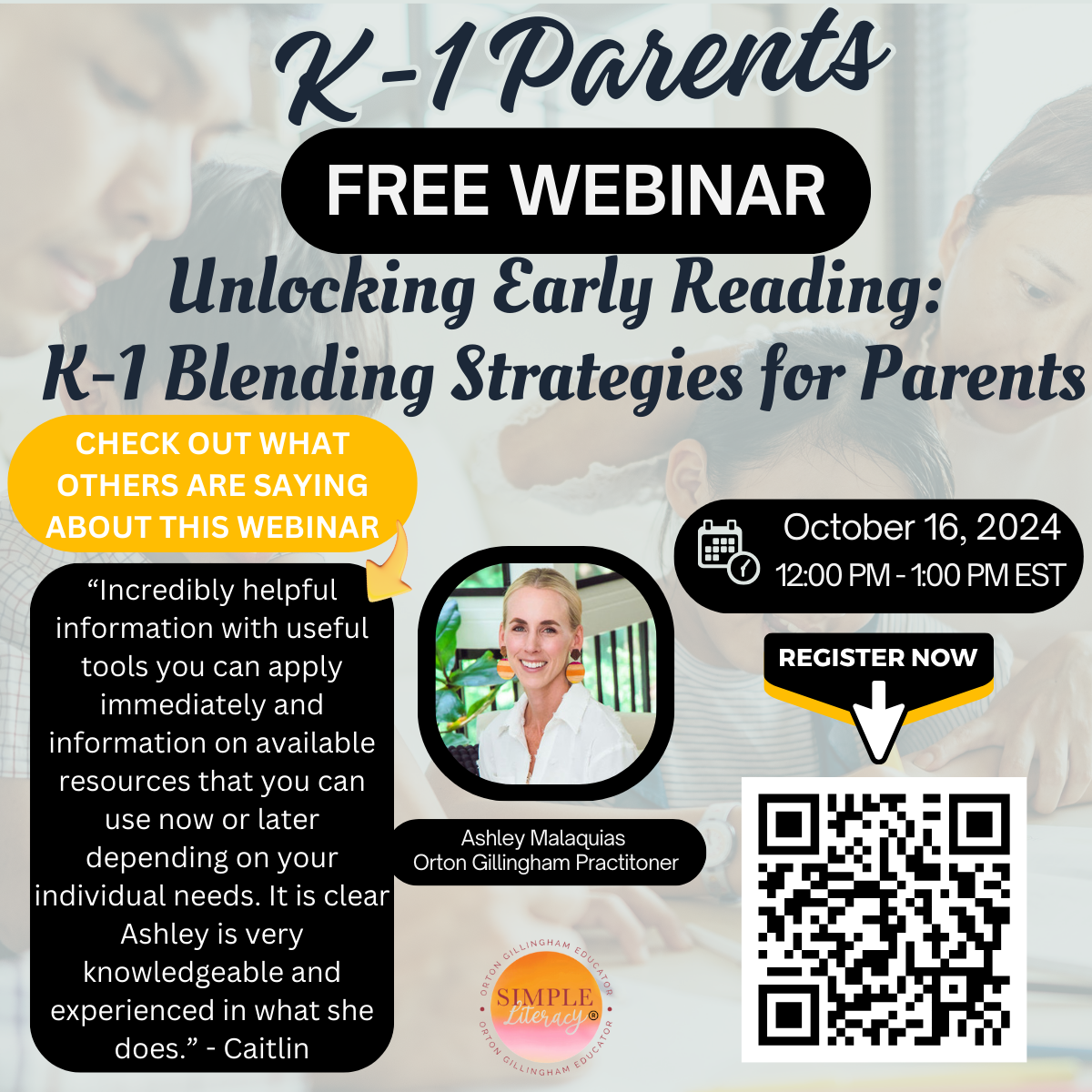
Want to learn more about how to help your child with this critical foundational literacy skill? Join me Wednesday, October 16, 2024 at noon EST for a free webinar on decoding (blending). Click the image below to register!
3. "Tap It Out" 👆
"Tap it out" is a fun, hands-on way to help kids blend sounds into words. They use their fingers to tap each sound the letter(s) make. For example, in the word "dog," they’ll tap /d/, /o/, /g/ and then say "dog." It’s a great strategy to help them when they’re stuck on a word.
4. High-Frequency Words 📖
These are words that pop up all the time in reading, like "the," "and," or "is." Since we see these words so often, it’s helpful for kids to recognize them quickly without sounding them out. The more high-frequency words they know, the smoother their reading will be!
5. Irregular Words 🤔
Some words just don’t follow the rules of phonics. These are called irregular words because we can’t sound them out in the usual way. For example, the word "said" doesn’t sound how it looks! Kids need to memorize these tricky words to read them easily.
6. Sight Words 👀
Sight words are words that kids can recognize right away, without needing to sound them out. These are often high-frequency or irregular words, and knowing them by sight helps your child read faster and more smoothly.
7. Orthographic Mapping 🗺️
This is a fancy term for how kids mentally connect sounds to letters and remember words. It’s the process of locking words into long-term memory so they can read them automatically.
8. Syllable 🧩
A syllable is a whole word or part of a word with one vowel sound. When we say vowel sounds, we naturally open our mouths wider, which puts more emphasis on the vowel. Think of it like a beat in a word. For example, "table" has two syllables: ta-ble. Breaking words into syllables helps your child figure out how to read longer words.
9. Fluency 🗣️
Fluency is all about reading smoothly and quickly, almost like talking! When your child reads fluently, they don’t have to stop and sound out every word, which makes reading less tiring and comprehension stronger.
10. Prosody 🎶
Prosody is about the rhythm and expression in reading. When kids read with prosody, they use the right tone, pause in the right places, and make the reading sound natural. It’s like putting music into words!
High-Frequency Word Hack
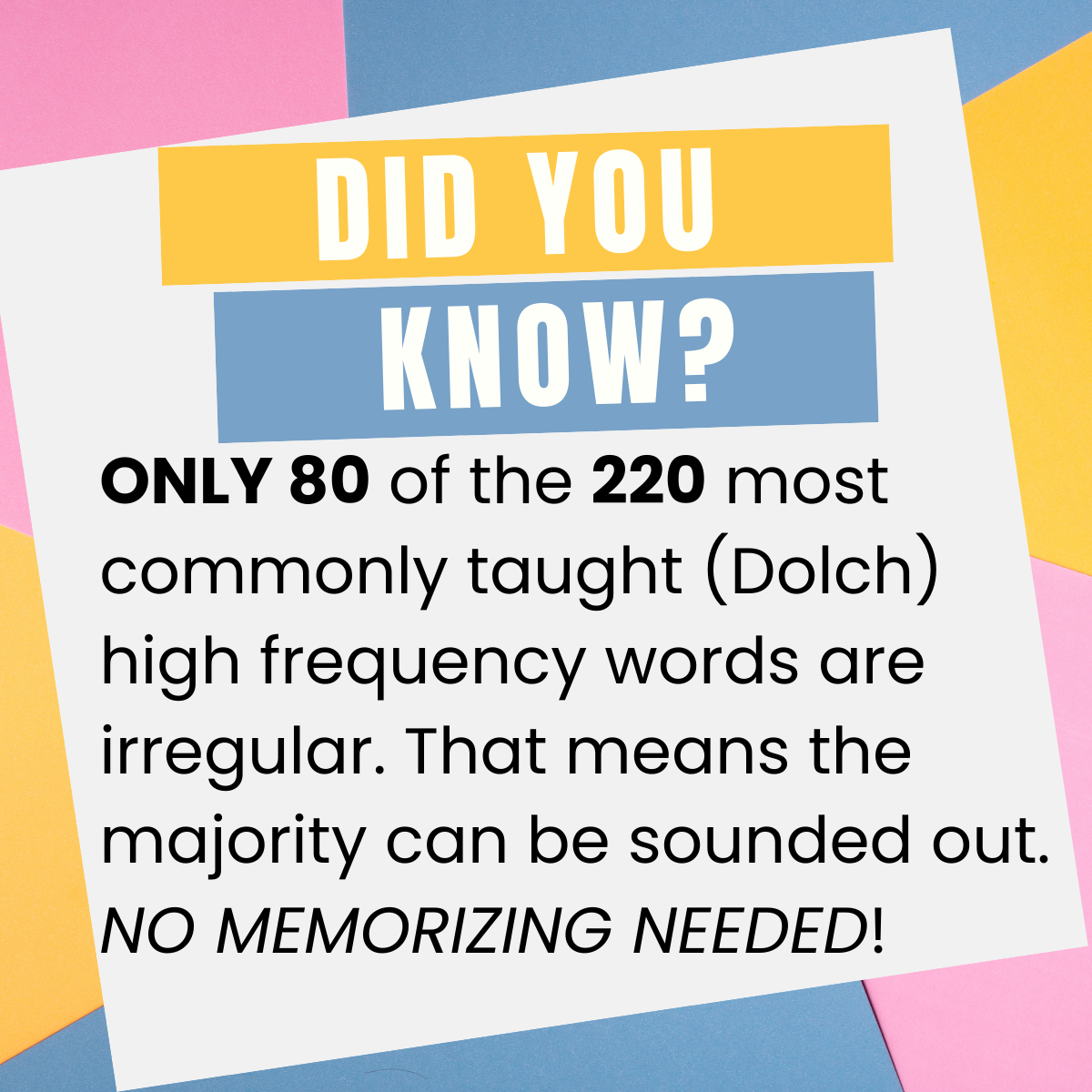
More details on how to support your child with high-frequency words coming soon!